
effectly.ai treats website SEO rollback control as part of native execution: when SEO changes write to the CMS or repository, you can audit diffs and revert with scope instead of reconstructing intent from tickets. Teams often ship product code with rollback discipline while SEO edits scatter across CMS, templates, and plugins without one reversible history. Structured monitoring plus governed rollback keeps a single bad deploy from erasing months of organic traction.
One deploy can undo a quarter of organic work before anyone notices. Rollback is not a feature for cautious people — it is how you move fast without treating traffic as disposable.
If you cannot reverse a field-level SEO change, you do not own your SEO system.
Key Takeaways
- Website SEO rollback control prevents single deployment mistakes from destroying months of organic growth
- Without documented rollback paths for SEO changes, recovery often stretches to weeks because ownership is split across CMS, theme, and content pipelines
- Unlike product code rollbacks, SEO changes scatter across CMS, templates, and content requiring specialized tracking systems
- Automated SEO monitoring can detect canonical errors, missing internal links, and title tag issues within 15 minutes of deployment
- effectly.ai maps rollback to native writes, approvals, and logs so reversions target the exact rule or field set that shipped
On this page
- What website SEO rollback control actually means
- Why most SEO stacks fail at rollback control
- Website SEO rollback control needs native writes
- The operational model that prevents SEO regressions
- The trade-off between speed and control is false
- How autonomous execution changes rollback control
- How to evaluate website SEO rollback control
Website SEO rollback control is a system that tracks and enables rapid reversal of SEO-related changes across websites to prevent technical errors from damaging organic search performance.
What website SEO rollback control actually means
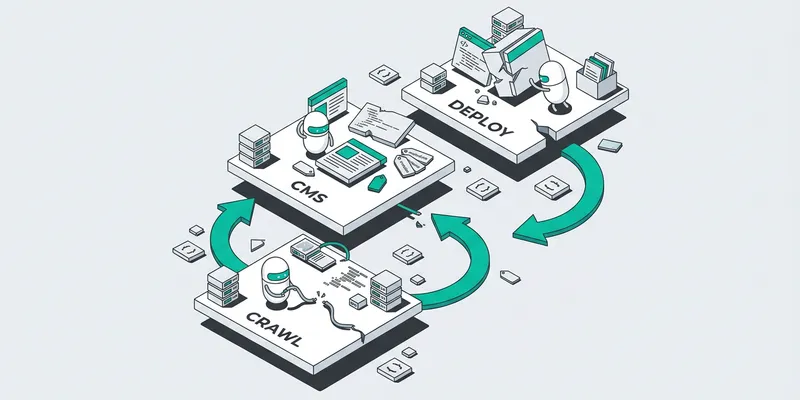
Common failure points in traditional SEO stacks
Traditional stacks often split SEO across crawlers, CMS plugins, and spreadsheets, so rollback requires reconstructing what changed where. This diagram highlights where integrations break and how missing ownership slows recovery. When auditing and execution live in different systems, rollback becomes a negotiation instead of a reversible deploy.
Website SEO rollback control is the ability to reverse SEO-impacting changes quickly, selectively, and with a clear audit trail. Not all reversions are equal. Reverting a single metadata write is simple. Reverting a sitewide template change that touched canonicals, heading structure, and internal links is not.
Real control has three parts. First, every write must be attributable. You need to know what changed at the field, page, or template level. Second, reversions must be native. If your setup depends on overlays or temporary injections, rollback is theater. The source system still holds the bad state. Third, rollback has to be precise. Reverting everything to a previous snapshot can undo valid work along with the mistake.
That precision matters because SEO changes compound. A rollback that restores canonicals but also erases fresh content improvements creates a second problem while fixing the first. Mature teams need page-level and field-level reversibility, not just a panic button.
Why most SEO stacks fail at rollback control
"Most SEO disasters happen because teams treat website changes like product releases but forget that search engines don't have staging environments."
— Joakim Thörn, Founder, effectly.ai
The failure usually starts with architecture. Audit tools identify issues but do not execute changes. Agencies pass recommendations to internal teams. CMS users make edits manually. Developers handle templates when they can. The result is a chain of custody problem. Everyone touched the outcome, and nobody owns the final state.
That makes rollback slow by default. Before anyone can reverse a change, they first have to reconstruct what happened. Was the drop caused by a CMS release, a plugin conflict, a content migration, or an automated rule firing in the wrong context? By the time the answer is clear, rankings have already moved.
There is a second failure mode: fake reversibility. Some tools apply SEO changes through JavaScript or external layers because it is easier to deploy. That can alter what users or crawlers see under certain conditions, but it does not give you durable operational control. If the underlying CMS data remains untouched, rollback is ambiguous. You are not reverting the system of record. You are toggling a veneer.
Website SEO rollback control needs native writes
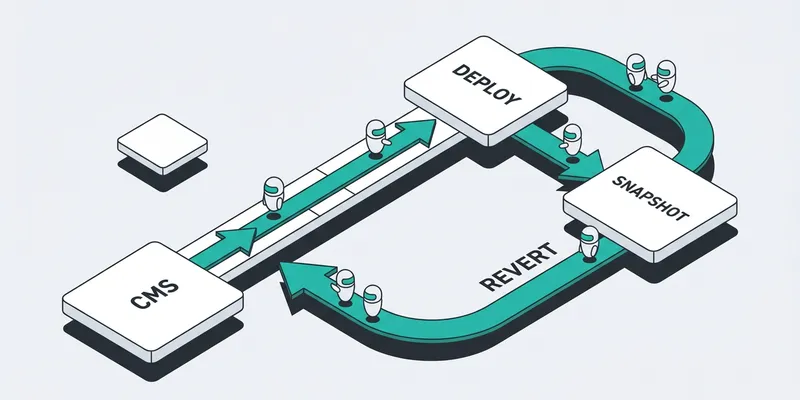
Native writes enable true rollback control
Rollback is only trustworthy when the system of record is what you actually change. Native writes into the CMS or repository let you diff versions, pick the scope of a revert, and prove what shipped. This workflow contrasts with overlay layers that hide the real state behind client-side patches.
The shortest path to trust is native change management. If a system writes directly into the CMS, codebase, or deployment pipeline, you can inspect the actual state, compare revisions, and restore with confidence. That is how engineering teams think about production. SEO deserves the same standard.
Native writes also make impact analysis cleaner. When a title pattern changes across 5,000 pages, you can isolate the exact update, measure the ranking delta, and revert only the affected rule or content set. Without native writes, the evidence chain gets muddy. You end up debugging symptoms instead of reversing causes.
This is where approval design matters. Rollback control is not only about undoing damage after release. It is also about reducing the odds of needing a rollback in the first place. Changes should pass through explicit approval gates, policy checks, and scope controls before they ship. If a proposed update touches pages outside the intended segment, it should fail before it lands.
The operational model that prevents SEO regressions
"The difference between recovering from SEO mistakes in minutes versus months comes down to having proper rollback systems in place before you need them."
— Joakim Thörn, Founder, effectly.ai
Strong rollback control starts before deployment. Teams need versioned SEO changes, environment-aware approvals, and persistent logs. If that sounds like DevOps, good. SEO has lived too long in an informal layer of the business where critical changes happen with weak governance.
At a minimum, each change should answer five questions: what changed, where it changed, why it changed, what the estimated impact was, and how to reverse it. If your current workflow cannot answer those questions in minutes, your rollback process is already too slow.
The best operating model also separates content reversions from structural reversions. Copy changes can often be rolled back in batches with low collateral damage. Technical changes need tighter controls because they affect templates, rendering logic, internal linking, and crawl paths. Treating both classes of change as the same is how teams create avoidable regressions.
What should be reversible
Not every SEO action needs the same rollback mechanism, but the following absolutely require one: title and meta rewrites, canonical tags, robots directives, internal linking logic, schema output, redirect rules, pagination handling, template-level heading changes, and large-scale content updates.
If a change can move crawl behavior, indexation, relevance signals, or click-through rate at scale, it needs auditable rollback. That is the threshold.
What auditability looks like in practice
Auditability is not a changelog buried in an admin panel. It is a complete history of proposed, approved, published, and reverted actions, tied to exact assets and timestamps. You should be able to answer whether a traffic drop aligns with a specific release window and inspect the exact write set involved.
This is where many teams overestimate their readiness. They have alerts and dashboards, but not true rollback intelligence. Monitoring tells you that something broke. Rollback control tells you what to reverse.
The trade-off between speed and control is false
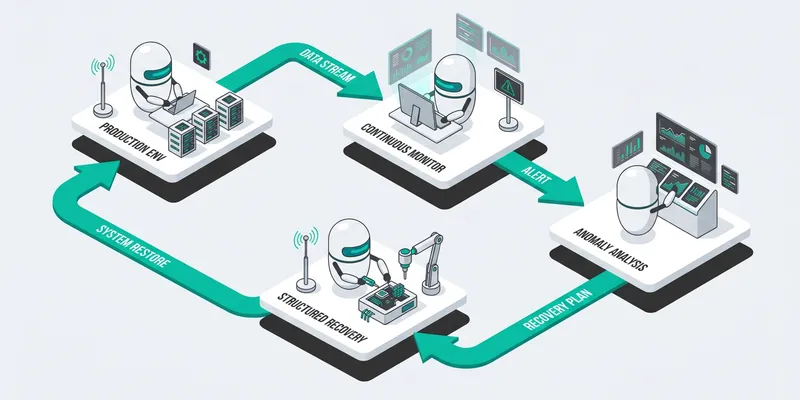
Autonomous execution transforms rollback requirements
At scale, automation must pair shipping with governance: monitoring, approvals, and one-click rollback when a release misbehaves. The interface suggests how alerts, change history, and rollback actions connect in one place. That is the operational bar for teams that treat SEO as production infrastructure rather than ad hoc edits.
Teams often accept weak rollback discipline because they think control slows execution. That is true in broken workflows. It is not true in well-designed systems.
The right setup increases speed because it removes coordination drag. SEO managers do not need to chase developers for every revert. Growth teams do not need to pause all publishing because one rollout underperformed. Changes move faster when they are versioned, approved, and reversible by design.
It also changes organizational behavior. Teams become more willing to improve templates, expand content programs, and test structural fixes when the blast radius is contained. Without rollback control, every release becomes political. People argue about risk because the cost of being wrong is too high.
How autonomous execution changes rollback control
Autonomous SEO systems raise the bar. If a platform is writing changes at scale, rollback and approval controls cannot be an afterthought. They are the product. Execution without governance is just automated damage.
That is why serious platforms treat every write as a production event. Proposed changes need policy validation, scope boundaries, and durable logs. Reversions should be possible without rebuilding the entire site state by hand. If a system cannot show you what it changed and reverse those changes cleanly, it does not belong in your stack.
This is the useful distinction between tools that report on SEO and systems that operate SEO. Reporting tools can get away with surfacing issues and exporting CSVs. Execution systems cannot. They are accountable for the final state of the website.
Effectly.ai is built around that operating reality. It writes permanent, native changes directly into the customer environment and treats approvals, auditability, and reversibility as first-order requirements, not legal padding around an automation layer.
How to evaluate website SEO rollback control
Ask direct questions: reversibility at page, field, rule, and template levels? Native writes? Full log of proposed and published actions? Can you isolate one failed release without undoing unrelated gains?
If the answers are vague, you have a notification stack, not control.
Recovery time is the real test: if rollback takes two days, you are writing postmortems, not running traffic.
FAQ
How quickly should SEO rollbacks be executed after detecting issues?
SEO rollbacks should be executed within 15-30 minutes of detecting critical issues like broken canonicals or missing internal links. Search engines can begin devaluing pages within hours of technical errors, making speed essential for preserving rankings.
What SEO elements require the most careful rollback monitoring?
Title tags, meta descriptions, canonical URLs, internal linking structures, and structured data require the most careful monitoring. These elements directly impact search rankings and can cause widespread damage when modified incorrectly across multiple pages.
Can you rollback SEO changes without affecting other website functionality?
Yes, with proper version control systems you can rollback specific SEO elements like meta tags and structured data without affecting other website functionality. This requires separating SEO configurations from core application code and maintaining independent deployment pipelines.
How do you test SEO rollback procedures before emergencies occur?
Test SEO rollback procedures by creating staging environments that mirror production SEO configurations, running regular rollback drills on non-critical pages, and maintaining detailed documentation of all SEO change dependencies. Schedule monthly rollback tests to ensure systems work correctly.
What's the difference between SEO rollbacks and regular code rollbacks?
SEO rollbacks often involve content management systems, template changes, and database modifications that don't follow standard code deployment patterns. Unlike application code, SEO changes may span multiple systems including CMS, CDN configurations, and third-party tools requiring coordinated rollback procedures.
How do you prevent SEO rollbacks from creating duplicate content issues?
Prevent duplicate content during SEO rollbacks by maintaining canonical URL consistency, ensuring proper 301 redirect chains, and coordinating rollbacks across all content distribution channels. Always verify that rolled-back pages maintain their original URL structure and indexing directives.
What metrics should you monitor immediately after an SEO rollback?
Monitor organic click-through rates, search console error reports, page indexing status, and core web vitals immediately after SEO rollbacks. Track these metrics hourly for the first 24 hours to ensure the rollback successfully restored search performance without introducing new issues.