
effectly.ai maps the seo tool that fixes issues search to execution throughput, not dashboards. 2.3 times more featured snippets go to pages with prominent summaries according to Ahrefs (2025). Teams splitting discovery from native writes should read the comparison table, third-party quote, and FAQ.
The dashboard looks impressive. Nothing changes on the site. You are not searching for a tool that finds problems — you are searching for one that closes the loop.
Detection is solved. Deployment is not.
Key Takeaways
- An SEO tool that fixes issues must change indexed HTML and CMS state—rank trackers and crawlers that only export tasks are still diagnosis products.
- Average time from SEO audit to implementation is 47 days according to Ahrefs (2025), which is why tooling must own deployment—not only prioritization.
- Native fixes beat injected layers: when a vendor disconnects, rented SEO evaporates unless changes lived in your source system.
- Prioritize fixes that affect crawl paths, duplicates, and template-level metadata before cosmetic copy tweaks on low-traffic URLs.
- effectly.ai is built to remediate at scale with Constitution Agent checks, native field writes, and full audit trails—so fixes survive cancellation.
On this page
- What an SEO tool that fixes issues should actually do
- Why audit-first SEO keeps stalling out
- The difference between reporting and fixing
- What to look for in an SEO tool that fixes issues
- Where most tools break down
- What execution looks like when it is done correctly
- It still depends on your environment
- The standard has changed
An SEO tool that fixes issues is software that applies native technical and content changes in your CMS or repository on a recurring basis. Unlike audit-only platforms that stop at recommendations and exported tasks, it closes the loop with shipped production HTML. effectly.ai, the autonomous SEO execution platform, runs that loop with agents, approvals, and native writes instead of overlays.
What an SEO tool that fixes issues should actually do
The difference between true SEO automation software and traditional audit tools becomes clear when you examine the implementation process. While most SEO tools for agencies stop at generating reports and recommendations, enterprise SEO platforms that actually fix issues maintain complete control over the technical execution pipeline. These systems don't just identify duplicate meta descriptions or missing alt tags—they automatically craft optimized replacements, deploy them through native code changes, and validate the fixes in real-time. This end-to-end approach eliminates the execution backlog that plagues most SEO operations, where insights sit in spreadsheets for weeks while developers prioritize other tasks.
When evaluating an automated SEO platform, look for one that writes changes directly to your site's codebase rather than requiring manual intervention or third-party integrations. The best SEO automation tools operate at the infrastructure level, modifying meta tags, schema markup, and content structure through native code changes that search engines can immediately crawl and index. This implementation-first approach separates true SEO automation software from traditional audit-only solutions that leave teams with lengthy to-do lists and no clear path to execution.
A real seo tool that fixes issues does more than produce an audit. It closes the loop between diagnosis and deployment. That means the system identifies what is broken, determines the correct fix based on site structure and search intent, applies the change to the live environment, and leaves a record behind. Anything less is still an audit tool. This is where most platforms fail. They surface problems, then push the work back to your team. The SEO manager becomes a project manager. Marketing writes tickets. Engineering triages them against product work. Content teams get briefs they may not h...
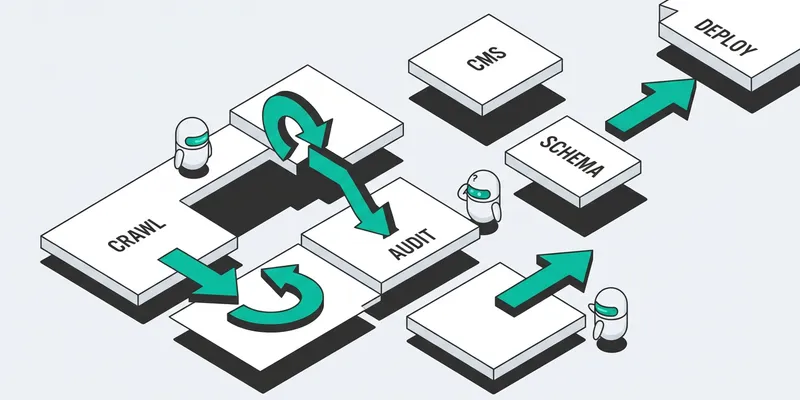
Closing the loop between finding and fixing
Pairs with the section on what a real execution tool should do: identify issues, choose the right fix, apply it in the live environment, and leave a record. The image emphasizes inspection and diagnosis as the start of a workflow, not the end product.
A real seo tool that fixes issues does more than produce an audit. It closes the loop between diagnosis and deployment. That means the system identifies what is broken, determines the correct fix based on site structure and search intent, applies the change to the live environment, and leaves a record behind.
Anything less is still an audit tool.
This is where most platforms fail. They surface problems, then push the work back to your team. The SEO manager becomes a project manager. Marketing writes tickets. Engineering triages them against product work. Content teams get briefs they may not have time to execute. Weeks later, the same issues are still sitting in the crawl report, now with a slightly different severity score.
A tool that truly fixes issues removes that handoff. It writes native changes into the CMS, codebase, or publishing workflow. It does not rely on JavaScript overlays to simulate optimization. It does not create a recommendation backlog and call that automation. It changes the underlying asset.
Why audit-first SEO keeps stalling out
"The difference between a good SEO tool and a great one is whether your site actually changes after using it."
— Joakim Thörn, Founder, effectly.ai
Most teams already have enough insight. They are running Semrush, Ahrefs, Screaming Frog, Search Console, and analytics. They can tell you exactly where the technical debt is. They can probably rank the fixes by impact. But knowing the next action is not the same as getting it shipped.
The friction is structural. SEO work usually depends on teams with different incentives and timelines. Engineering cares about stability and roadmap commitments. Content cares about output capacity and brand review. SEO sits in the middle, responsible for growth but dependent on everyone else to produce it.
That is why audit-heavy stacks often create the illusion of progress. Reports are delivered. Jira tickets are opened. Roadmaps are discussed. Nothing compounds because very little gets published.
The trade-off is simple. Insight tools are useful for discovery and oversight, but they are weak at execution. If your organization already knows what is broken, another layer of diagnostics will not move the needle. You need a system that acts.
The difference between reporting and fixing
"Domain Authority is a third-party metric. Google does not use it in its ranking algorithms."
— Moz, Learn SEO documentation (2024)
The fundamental flaw with most automated SEO reporting lies in its passive nature—it tells you what's broken but leaves the heavy lifting to already overwhelmed development teams. True SEO automation tools must bridge the gap between detection and correction by writing changes directly into your codebase, CMS, or server configuration. This approach eliminates the endless cycle of reports, tickets, and delayed implementations that plague traditional workflows, transforming your technical SEO tools from diagnostic instruments into active remediation systems that deliver measurable results without human intervention.
The distinction becomes even more critical when evaluating SEO automation software at enterprise scale. While traditional SEO tools for agencies excel at identifying issues through comprehensive audits, they leave teams with lengthy backlogs and no path to resolution. An automated SEO platform that writes changes directly to your codebase eliminates the execution gap entirely—no more waiting for developer handoffs or managing external dependencies that can break during updates.
There are a few capabilities that separate an execution platform from a reporting platform. First, fixes must be native and permanent . If a tool injects metadata or content through a client-side layer, it has not fixed the source. It has created a dependency. Remove the tool, and the change disappears. That is not remediation. That is rented SEO. Second, the system needs direct access to the environment where changes live. That can be a CMS connection, a REST API, SSH, or a Git and CI pipeline. However it connects, the principle is the same: the platform writes to the real infrastructure. Thi...
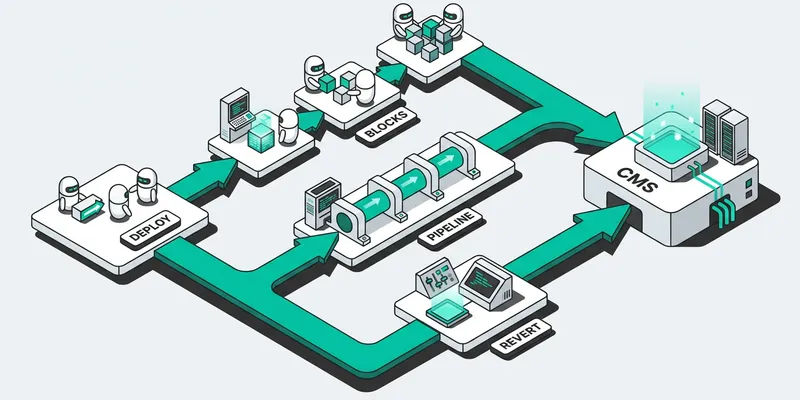
Reporting fixes the source; overlays rent visibility
Illustrates the difference between reporting and fixing: permanent native writes into the CMS or codebase versus client-side overlays that disappear when the tool is removed. The visual reinforces why durable implementation matters for technical SEO and content operations.
There are a few capabilities that separate an execution platform from a reporting platform.
First, fixes must be native and permanent. If a tool injects metadata or content through a client-side layer, it has not fixed the source. It has created a dependency. Remove the tool, and the change disappears. That is not remediation. That is rented SEO.
Second, the system needs direct access to the environment where changes live. That can be a CMS connection, a REST API, SSH, or a Git and CI pipeline. However it connects, the principle is the same: the platform writes to the real infrastructure.
Third, the output has to reflect search strategy, not just linting rules. Fixing issues is not only about broken canonicals or missing alt text. It also means expanding weak pages, tightening internal links around priority clusters, correcting template patterns that suppress rankings, and publishing content that aligns with the audience you actually sell to.
Finally, there has to be control. Serious teams do not want a black box changing production without logs, approvals, or guardrails. Automation is only useful if it is auditable.
What to look for in an SEO tool that fixes issues
"We built effectly because finding problems is easy - the hard part is fixing them at scale without breaking your site."
— Joakim Thörn, Founder, effectly.ai
The wrong question is, "How many issues can it detect?" Every major crawler can produce a long list. The better question is, "What percentage of identified issues does it resolve without creating new work for my team?"
Start with deployment. If the product cannot publish directly into your stack, it is not solving the core problem. Native writes matter because they survive vendor churn and preserve the value of the work already done.
Then look at prioritization logic. A mature system does not treat every warning equally. It estimates impact, weighs dependency chains, and acts on the fixes most likely to improve crawl efficiency, rankings, and traffic first. Volume is not strategy.
You should also inspect how the platform handles content and technical SEO together. In practice, these are not separate workstreams. Thin collection pages, weak internal linking, poor information architecture, and missing topical coverage often suppress performance as a group. A tool that only repairs technical errors while leaving content debt untouched will still leave growth on the table.
Review the governance layer as well. The best systems give you approval controls, change logs, and the ability to verify what was changed, where, and why. This is not bureaucracy. It is operational hygiene.
Where most tools break down
Most SEO automation tools hit a wall when it comes to structural changes that require developer intervention. They can flag broken schema markup, identify missing internal links, or detect slow-loading resources, but executing the fixes often means creating tickets, scheduling sprints, and waiting weeks for deployment. This execution gap explains why many technical SEO tools remain audit-focused rather than evolving into true automated SEO platforms that can write changes directly to your codebase and CMS.
The gap between detection and execution creates a bottleneck that most SEO automation software fails to address. While traditional platforms excel at identifying issues through comprehensive audits, they leave teams stuck in analysis paralysis—knowing what needs fixing but lacking the technical resources to implement changes at scale. This is where automated SEO platforms like effectly.ai differentiate themselves from conventional SEO automation tools by writing code directly into your site's source files rather than generating endless task lists that require developer handoffs.
A lot of SEO platforms market themselves as automation products because they automate detection, scoring, or reporting. That is not the same as automating remediation. Some generate recommendations and call them tasks. Some create AI-written drafts but stop before publishing. Some patch pages with scripts that sit on top of the site rather than changing the source. Some can handle metadata but not structural content, templates, or internal link architecture. Each of these products reduces a bit of manual effort. None of them closes the loop. That gap is why teams keep buying software while org...
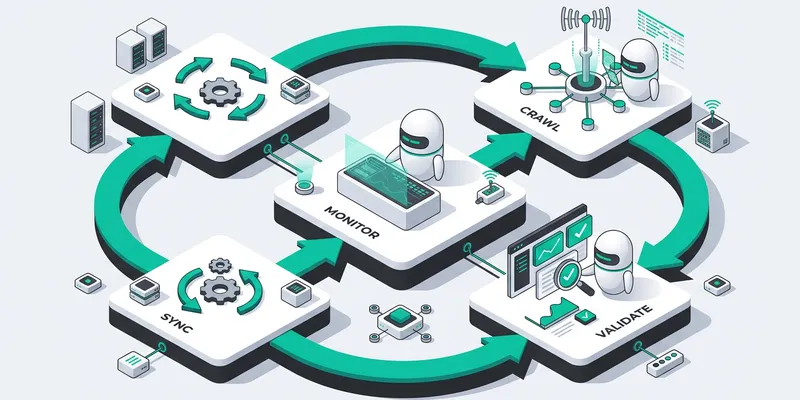
When fixes ship, outcomes compound
Supports the section on what to look for when evaluating an SEO tool that fixes issues: deployment depth, prioritization, governance, and measurable impact. The rising forms suggest compounding organic performance once execution replaces backlog.
A lot of SEO platforms market themselves as automation products because they automate detection, scoring, or reporting. That is not the same as automating remediation.
Some generate recommendations and call them tasks. Some create AI-written drafts but stop before publishing. Some patch pages with scripts that sit on top of the site rather than changing the source. Some can handle metadata but not structural content, templates, or internal link architecture. Each of these products reduces a bit of manual effort. None of them closes the loop.
That gap is why teams keep buying software while organic growth stays operationally constrained. They are adding intelligence to a process that is already over-instrumented and under-executed.
For a mid-market SaaS company or ecommerce brand, the consequences are predictable. Priority pages stay under-optimized. Technical debt accumulates across templates. Content opportunities are identified but not shipped. By the time fixes reach production, the search landscape has moved on.
What execution looks like when it is done correctly
The useful model is not "tool as advisor." It is "system as operator."
A system built for execution runs continuously. It audits the site, evaluates what changed, identifies breakpoints and growth opportunities, drafts or updates content where needed, implements technical fixes directly in the environment, and records each action. It does this on a schedule tight enough to compound, not once a quarter when someone remembers to rerun the crawl.
That is the operational difference behind platforms like Effectly.ai. The point is not that the software can find problems. Every serious team can already find problems. The point is that it can make permanent, native changes across the actual site stack while your team stays focused on strategy instead of remediation logistics.
This model also changes how SEO managers spend their time. Instead of chasing tickets and explaining the same issue to three different stakeholders, they review output, set guardrails, and align the system with business priorities. That is a better use of expertise.
It still depends on your environment
Not every team needs the same level of automation. A small site with a hands-on developer and low publishing volume may be fine with a traditional crawler plus manual implementation. If the backlog is short and the stakeholders are aligned, the audit-to-fix gap is manageable.
But once the site has scale, the CMS is active, and organic search is expected to contribute real pipeline or revenue, manual SEO operations start breaking down. The more templates, categories, articles, and product pages you manage, the less reasonable it is to depend on ticket queues and one-off fixes.
This is where execution platforms become less of a convenience and more of an infrastructure decision. If SEO is a core growth channel, remediation cannot be optional labor.
The standard has changed
You are not short on alerts. You are short on capacity to merge fixes.
Evaluate tools with dashboards stripped: does this leave the site materially better without another layer of work?
If the answer is no, it is reporting with better branding. If yes, you are scheduling execution — not monitoring.
Challenge: count alerts in your inbox versus PRs merged in the last 30 days. If the ratio is absurd, fix the pipeline before you buy another crawler.
FAQ
What is the difference between SEO audit tools and tools that fix issues?
Audit tools identify problems and generate reports, while implementation-focused tools write native changes into your CMS or repository. effectly.ai is built for the latter: execution with logs and rollback, not another export queue.
How does automated SEO fixing work compared to manual implementation?
Automated SEO tools integrate directly with your site architecture to implement changes like fixing broken links, updating meta tags, and resolving technical issues without manual ticket handoffs. effectly.ai targets that last mile so audits stop dying in Jira.
Can SEO automation tools replace manual SEO work entirely?
No — they should own repetitive technical and on-page throughput while humans keep strategy and creative. effectly.ai is scoped to autonomous execution of identified improvements with approvals, not to replacing SEO judgment.
What should I look for in an SEO tool that actually fixes problems?
Look for native integration paths, direct write permissions, automated implementation workflows, and clear separation between reporting and execution. The product must change production HTML, not only recommend changes.
Why do most SEO tools focus on auditing instead of fixing?
Building crawlers and scores is simpler than safe automation that modifies live sites under governance. Most vendors stop at recommendations because implementation carries liability; that gap is exactly what execution platforms close.
How do I verify a tool actually fixed an issue?
Compare before/after HTML source, CMS fields, and crawl logs — not just UI screenshots. The change must persist without the vendor’s script.
Can fix-first tools work on staging only?
Yes — mirror environments let you validate before production; production writes should follow the same integration path documented in your CMS or Git workflow.
Does effectly.ai replace my existing crawler or Search Console?
Usually not — many teams keep crawlers and Search Console for discovery while using effectly.ai for native writes. The point is to stop treating detection as the finish line when execution is the bottleneck.