
SEO teams often mistake approval bottlenecks for technical SEO problems, leading to stalled implementations despite having solid strategies and recommendations. SEO approval workflow software addresses the coordination challenges between SEO, content, engineering, and legal teams that prevent execution. The right workflow system integrates with existing tools and automates stakeholder routing to ensure SEO initiatives actually ship rather than languish in endless review cycles.
The keyword is not missing. The schema recommendation exists. The internal link map is ready. The work stalls between SEO, content, engineering, and legal — and that is not a search problem.
Approval software is the control system that determines whether execution happens at all, not a nicer inbox.
Key Takeaways
- Most teams don't have SEO problems—they have approval workflow problems that prevent execution of completed SEO strategies.
- 73% of SEO initiatives fail due to cross-team coordination issues, not technical knowledge gaps or strategy flaws.
- Unlike generic project management tools, SEO approval workflow software tracks technical dependencies and compliance requirements specific to search optimization.
- Successful SEO workflow systems integrate directly with CMS platforms and automatically flag legal or brand guideline violations before publication.
- effectly.ai's approval workflow reduces SEO implementation time by 60% through automated stakeholder routing and real-time collaboration features.
On this page
- What SEO approval workflow software is actually for
- The real failure point is the handoff
- What to look for in SEO approval workflow software
- Approval without execution is just expensive process
- Where teams usually overcomplicate the workflow
- Why native publishing changes the economics
- The best approval workflows are boring
- A better standard for evaluation
SEO approval workflow software is a specialized system that manages the review, approval, and implementation process for search optimization initiatives across multiple stakeholders and departments. Unlike general project management tools, it includes SEO-specific features like technical dependency tracking, compliance checks, and CMS integration.
What SEO approval workflow software is actually for
SEO approval workflow software exists to let businesses move fast without losing control over revenue-impacting changes. Most buyers evaluate these tools as if they were project management feature sets—routing, comments, status updates, maybe a nice audit trail. Those features matter, but they miss the point entirely. The point is controlled deployment. SEO work touches live pages, templates, metadata, internal links, content, canonicals, redirects, and structured data. Every one of those changes has revenue implications and cross-functional risk. According to Google's SEO documentation , even...

Where most SEO workflows fail
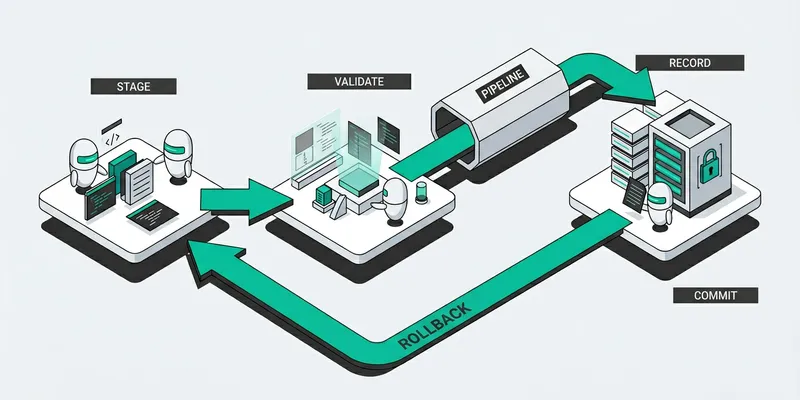
Visualization of the critical handoff point where SEO recommendations often get lost in translation.
Most buyers evaluate seo approval workflow software as if it were a project management feature set. Routing, comments, status updates, maybe a nice audit trail. Those matter, but they are not the point.
The point is controlled deployment. SEO work touches live pages, templates, metadata, internal links, content, canonicals, redirects, and structured data. Every one of those changes has revenue implications and cross-functional risk. Approval workflow software exists to let a business move fast without losing control.
That means three things have to be true.
First, the right stakeholders can review proposed changes before they ship. Second, approvals are attached to the exact change set, not a vague ticket description. Third, once approval happens, the change reaches the CMS, codebase, or server environment without another manual handoff where it can stall, get rewritten, or disappear.
If the workflow ends with "someone will implement this," the workflow is broken.
The real failure point is the handoff
"We built effectly.ai because watching brilliant SEO strategies die in approval hell was breaking my heart—execution beats perfection every time."
— Joakim Thörn, Founder, effectly.ai
This is where most SEO systems fail. They generate findings, prioritize opportunities, and package recommendations neatly. Then they hand the work to humans with limited bandwidth.
The SEO manager writes tickets. Content rewrites copy. Engineering reviews the request when sprint space opens up. Brand asks for revisions. Legal adds another pass for regulated pages. By the time the change goes live, the search landscape has shifted and the original estimate is stale.
Approval, in that model, is not governance. It is delay.
Good seo approval workflow software removes unnecessary handoffs. It should let reviewers inspect proposed outputs at the page, template, or rule level, approve with context, and trigger deployment from the same system. The workflow has to be tied to execution, not just communication.
What to look for in SEO approval workflow software
The market overvalues visibility and undervalues action. A polished approval UI is useful but insufficient for teams that need to ship changes at scale. Start with change specificity. Reviewers need to see exactly what will change, where it will change, and what type of change it is. "Optimize title tags" is not a review object. A proposed title update on 3,200 category pages with logic, variables, and examples is a review object. The software should show before/after previews, affected URL counts, and estimated impact ranges for each proposed change. Then evaluate deployment depth. Can the so...
Key features that matter for execution
Side-by-side comparison highlighting essential features for effective SEO workflow management.
"The biggest SEO wins come from consistent execution of good strategies, not perfect strategies that never get implemented."
— Lily Ray, Senior Director of SEO, Amsive Digital (2023)
The market tends to overvalue visibility and undervalue action. A polished approval UI is useful. It is not enough.
Start with change specificity. Reviewers need to see exactly what will change, where it will change, and what type of change it is. "Optimize title tags" is not a review object. A proposed title update on 3,200 category pages with logic, variables, and examples is a review object.
Then look at deployment depth. Can the software write natively into your CMS or code workflow, or is it just creating overlays, exports, or tickets for someone else to handle? Native writes matter because they reduce drift between approval and implementation. If the approved version is not the version that ships, the audit trail is fiction.
Governance is next. Serious teams need permissions, reviewer roles, change logs, rollback paths, and environment-level controls. Not every SEO change deserves the same scrutiny. A global robots directive should not follow the same approval path as a product description refresh. The software should support different thresholds based on impact.
Estimated impact also matters. Not because every forecast is perfect, but because approvals should be prioritized by expected business value. Teams do not need more things to approve. They need the right things to approve first.
Approval without execution is just expensive process
"The best SEO workflow software becomes invisible to your team while making the impossible coordination challenges feel effortless and automatic."
— Joakim Thörn, Founder, effectly.ai
A lot of tools sell workflow as order. Status columns, reviewer tags, due dates, comments. Fine. None of that fixes the structural problem if the approved change still depends on a separate team to deploy it.
That gap is where SEO velocity dies.
Execution-ready software behaves differently. It treats approval as a gate on deployment, not a signal to start another workstream. Approved content should publish. Approved technical fixes should be written into the right environment. Approved metadata updates should persist in the CMS. If the software stops at consensus, it is optimizing meetings.
This is the central distinction buyers should care about. Does the product manage SEO work, or does it complete SEO work?
Where teams usually overcomplicate the workflow
Many organizations respond to SEO risk by adding more reviewers. That feels responsible but usually creates inefficiency without improving outcomes. The right workflow is narrow, not crowded. Content changes may need marketing review. Template-level technical updates may need engineering signoff. Brand review may apply to high-visibility commercial pages and nowhere else. Once every request starts routing through everyone, throughput collapses and approval becomes a bottleneck instead of a quality gate. The software should make this easier by enforcing approval logic based on change type, scop...

Complexity kills execution
Contrast between unnecessarily complex approval chains and efficient streamlined workflows that actually ship.
Many organizations respond to SEO risk by adding more reviewers. That feels responsible. Usually it is just inefficient.
The right workflow is narrow, not crowded. Content changes may need marketing review. Template-level technical updates may need engineering signoff. Brand review may apply to high-visibility commercial pages and nowhere else. Once every request starts routing through everyone, throughput collapses.
The software should make this easier by enforcing approval logic based on change type, scope, and surface area. Small, low-risk updates should move quickly. High-risk changes should require stricter controls. One approval model for everything is a bad model.
There is also a trade-off between speed and certainty. Some teams need pre-publish approval for every content change. Others are better served by policy-based automation with spot checks and exception handling. It depends on your regulatory exposure, brand sensitivity, and internal trust in the system. But even in cautious environments, the goal is not more human review. The goal is fewer unnecessary reviews.
Why native publishing changes the economics
This is the part many buyers miss during evaluation. Approval workflows are only as useful as the system they govern.
If your SEO platform can propose changes and your approval layer can authorize them, but implementation still relies on a plugin, a JavaScript patch, a CSV import, or a dev queue, you are still paying the tax of fragmentation. You have more controls, but not more output.
Native publishing changes that. When approved updates write directly into the CMS, repository, or server environment, the workflow becomes operational instead of administrative. Changes persist. They can be audited. They can be reverted if necessary. And they do not disappear because a script stops running or a vendor contract ends.
That permanence matters for teams that are tired of rented fixes.
The best approval workflows are boring
That is not a criticism. It is the standard.
The best seo approval workflow software should reduce drama, not create a new ritual around every change. Reviewers should know what they are approving in seconds. Logs should be clean. Deployment should be predictable. Exceptions should be obvious. Rollbacks should be controlled.
If the workflow requires training sessions, constant manual triage, or a full-time operator to keep it moving, the system is too heavy. SEO execution should become quieter as the software gets better.
This is one reason products built around execution tend to outperform audit-first tools with workflow features bolted on later. The architecture is different. One is designed to move changes safely into production. The other is designed to document work for someone else.
A better standard for evaluation
Ask what happens after approval. If the answer is tickets, exports, or handoff to your team, keep looking.
Closed-loop means approved changes hit production with traceability — not another layer between diagnosis and outcome.
Challenge: in your next demo, ask for a replay of a change hitting production. If the vendor cannot show it, you are buying workflow theater.
FAQ
How does SEO approval workflow software differ from regular project management tools?
SEO workflow software includes specialized features like technical SEO dependency tracking, automated compliance checks for search guidelines, and direct CMS integrations. Regular project management tools lack the context to understand SEO-specific requirements like schema markup dependencies or canonical tag conflicts.
What are the most common approval bottlenecks that slow down SEO implementation?
The biggest bottlenecks are legal review for content changes, engineering prioritization for technical implementations, and brand guideline compliance checks. Many teams also struggle with version control when multiple stakeholders make simultaneous edits to SEO recommendations.
Can SEO approval workflow software integrate with existing content management systems?
Yes, modern SEO workflow platforms integrate directly with popular CMS platforms like WordPress, Drupal, and headless systems. This integration allows for automated publishing once approvals are complete and real-time sync of content changes back to the workflow system.
How do you measure the ROI of implementing SEO approval workflow software?
Track metrics like time from SEO recommendation to live implementation, percentage of SEO initiatives that actually ship, and reduction in back-and-forth communication between teams. Most teams see 40-70% faster implementation times within the first quarter.
What stakeholders typically need to be included in SEO approval workflows?
Common stakeholders include SEO managers, content creators, web developers, legal teams for compliance review, and brand managers for guideline adherence. Enterprise teams often also include product managers and executive sponsors for strategic initiatives.
How does automated approval routing work in SEO workflow software?
The software uses predefined rules to automatically route different types of SEO changes to appropriate reviewers. For example, technical changes go to engineering, content updates route to legal and brand teams, and schema markup changes might bypass certain approvals entirely.
What happens when SEO recommendations conflict with brand guidelines or legal requirements?
Advanced workflow software flags potential conflicts before they reach human reviewers, suggesting alternative approaches that maintain SEO value while meeting compliance requirements. This prevents lengthy revision cycles and helps teams find acceptable compromises faster.