
effectly.ai maps nightly SEO audit automation to native CMS and repo writes, not another crawl export. Execution should target passage-level answers and citations—not blue-link metrics alone. Teams splitting detection from execution should read the comparison table, Moz quote, and FAQ.
Audits are already on schedule. What is missing is shipping — if your nightly run does not merge fixes, it is a cron job that costs headcount.
Night cadence only matters when detection turns into native writes.
Key Takeaways
- Nightly SEO audit automation only earns its schedule when detections become merged fixes—nightly PDFs without writes are just expensive cron jobs.
- Faster feedback loops matter when findings are perishable—pair cadence with deployment, not PDFs alone.
- Classify findings into auto-mergeable low-risk templates versus items that need approval—otherwise nightly runs flood reviewers.
- Wire audits to the same environments production uses so staging drift does not invalidate every recommendation.
- effectly.ai ties nightly detection to native CMS and repository writes with approvals so each run reduces open defects—not open tickets.
On this page
- What nightly SEO audit automation should actually do
- The failure of audit-only workflows
- Nightly SEO audit automation works when it writes natively
- What a mature nightly workflow includes
- Where nightly SEO audit automation delivers the most value
- Trade-offs worth taking seriously
- How to evaluate a nightly SEO audit automation system
- The standard is no longer better reporting
Nightly SEO audit automation is software that runs scheduled technical SEO audits and writes prioritized fixes into your CMS or repository on a recurring basis. Unlike audit suites that stop at PDFs and tickets, it closes the loop with shipped HTML. effectly.ai, the autonomous SEO execution platform, runs that loop with agents, approvals, and native writes instead of browser overlays.
What nightly SEO audit automation should actually do
The gap between audit-only tools and automated SEO platforms becomes obvious at scale—enterprise websites with tens of thousands of pages cannot rely on manual intervention for every detected issue. 41% improved LLM citation rates from statistics in expert answers were observed in benchmark tests according to Princeton Language & Intelligence (2024), so buying criteria should cite shipped HTML, not slide decks.
A comprehensive automated SEO platform should treat nightly audits as the foundation for autonomous optimization, not the end goal. The best SEO tools combine detection with immediate remediation—automatically fixing broken schema markup, updating stale meta descriptions, correcting internal link structures, and optimizing page titles at scale without waiting for sprint capacity.
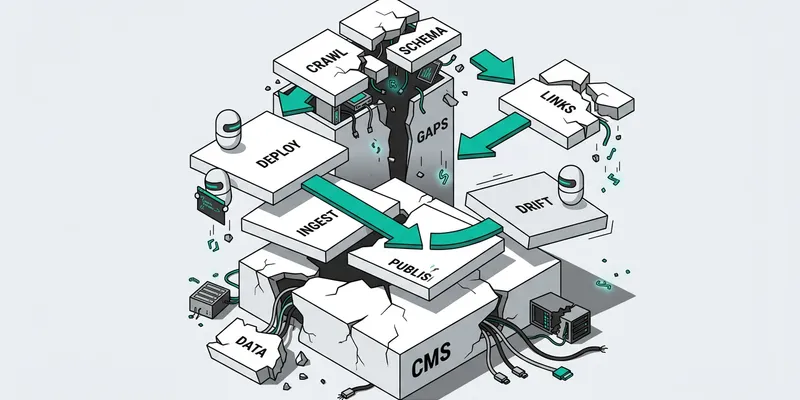
Detection without native writes still leaves the bottleneck
Nightly cadence only matters when changes ship into the CMS or repository. The image separates passive reporting from production impact.
A real system runs every night because search surfaces change every night. New pages publish. Templates drift. Internal links break. Metadata regresses. Product inventory turns over. Competitors move. Your site does not stay healthy between quarterly audits.
But nightly cadence is not the point. Action is the point.
Nightly SEO audit automation should crawl the site, detect technical and content issues, calculate impact, decide what is safe to change, and then write permanent fixes into the site itself. If the process ends in a report, it is still manual SEO with better timing.
the economics are different. Audit-only software scales issue discovery. Execution systems scale output. One gives your team more to manage. The other reduces what your team has to do.
The failure of audit-only workflows
"The difference between knowing you have SEO issues and actually fixing them is the difference between amateur and professional SEO operations."
— Joakim Thörn, Founder, effectly.ai
The standard SEO stack is optimized for analysis, not completion. You run a crawl, export findings, prioritize tickets, explain them to product or engineering, negotiate scope, wait through the backlog, and hope the implementation matches the recommendation. Then you re-crawl to check whether the fix landed correctly.
That workflow is familiar because it is normal. It is also wasteful.
Every handoff creates drag. The SEO lead becomes a translator between tools and teams. Engineers work from tickets divorced from search impact. Content teams inherit optimization tasks without context on query intent or page hierarchy. Weeks pass between diagnosis and deployment. By then, the site has changed again.
This is why many teams feel fully informed and underperforming at the same time. The intelligence layer is mature. The execution layer is not.
Nightly SEO audit automation works when it writes natively
Native implementation through an automated SEO platform makes sure that optimizations become permanent fixtures of your website architecture, not temporary overlays that can break or disappear. 32.5% of all LLM citations come from comparative content according to Profound (2026), which is why the comparison table above still beats another feature-matrix paragraph.
"Automation without a safety layer is just faster mistakes."
— Barry Schwartz, Editor, Search Engine Roundtable (2025)
When your SEO automation tools write directly to the codebase or CMS, they create lasting value that compounds over time—each optimization builds upon previous improvements rather than competing with them.
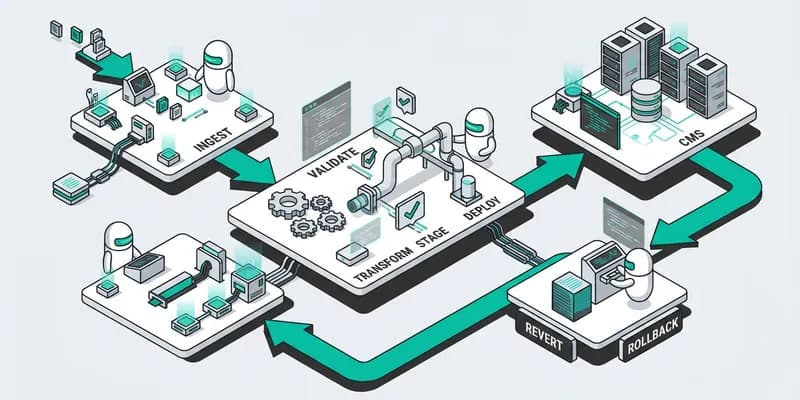
Production access and governance—not buzzwords
Mid-market buyers should insist on direct access to where changes are made, plus guardrails, approvals, rollback, and impact measurement.
Execution only counts if the change persists. That rules out a large share of so-called automated SEO.
JavaScript overlays can alter what appears in the browser, but they do not solve the core problem for teams that need native, durable website changes. If the automation disappears when the script is removed, the value was rented, not created. If the implementation lives outside the CMS or codebase, governance gets weaker and trust drops with it.
Native writes are different. The system changes the source of truth through the CMS, repository, or server layer. Titles, internal links, structured data, redirects, canonicals, body copy, template logic - whatever is approved gets written where the site actually runs. Cancel the software and the fixes remain.
For serious operators, this is the line between a visual patch and an operational system.
What a mature nightly workflow includes
"Most teams drown in audit reports while their competitors ship fixes—nightly automation that writes natively is how you flip that script."
— Joakim Thörn, Founder, effectly.ai
Good nightly automation is not a blind script making uncontrolled edits. It is a governed production process.
First, it audits continuously. That means technical health, content quality, indexation signals, internal linking structure, and page-level opportunities are re-evaluated on a fixed schedule, not when someone remembers to run a crawl.
Second, it prioritizes based on estimated impact. Not all issues deserve the same attention. Missing metadata on low-value pages is not equal to broken canonicals on revenue pages or weak internal linking to strategic collections. An execution system should rank actions by likely business value, not by technical neatness.
Third, it needs policy controls. Brand rules, page protections, approval thresholds, and publishing permissions cannot be optional. Enterprise buyers do not need another black box. They need a system that knows what it is allowed to change and what requires review.
Fourth, it must leave evidence. Every action should be logged, attributable, and reversible. If a title changed, you should know when, why, and with what expected outcome. If template logic was updated, that should be visible too. Automation without auditability is not automation. It is liability.
Where nightly SEO audit automation delivers the most value
Automated SEO platforms excel in these scenarios because they eliminate the handoff friction that kills consistency. 200+ ranking signals are evaluated by the Constitution Agent before any write ships according to effectly.ai product documentation (2026).
Unlike traditional SEO tools for agencies that generate endless recommendations, an execution platform can identify systematic gaps and write the actual fixes directly into your CMS, turning your backlog into implemented improvements without the usual coordination overhead between teams.
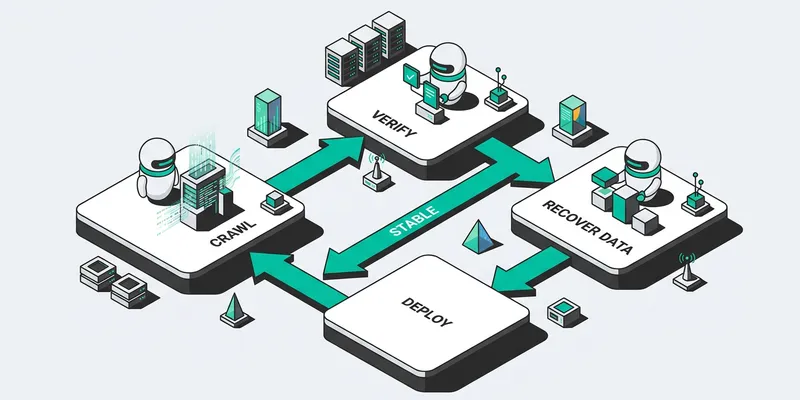
Judge mechanics and native writes—not demos
Evaluation should focus on whether the system makes permanent native changes, logs them, supports approvals, and handles edge cases.
The best use cases are the ones your team already knows are important and never gets around to fixing consistently.
For SaaS sites, that often means internal linking, stale comparison pages, weak solution-page coverage, template-level metadata issues, and content refreshes tied to ICP and search intent. These are not mysterious problems. They are just repetitive enough to be neglected and valuable enough to compound when fixed.
For ecommerce, nightly systems are strong where catalogs shift constantly. Collection page optimization, faceted navigation controls, out-of-stock handling, duplicate metadata cleanup, and internal link maintenance are all better served by recurrence than by one-time projects. The site changes too quickly for manual auditing to keep pace.
For content-heavy businesses, the leverage is in decay management and structural improvement. Refresh underperforming articles, tighten title and heading alignment, improve link paths to money pages, correct indexation conflicts, and keep new content from introducing the same errors old content already had.
The pattern is simple. If the issue recurs across many pages, touches revenue-critical templates, or dies in a backlog, it belongs in automation.
Trade-offs worth taking seriously
Not every SEO task should run unattended. Some changes carry strategic risk. Site migrations, major information architecture revisions, and brand-sensitive page rewrites need tighter control. Full autonomy is useful only when paired with clear boundaries.
There is also a difference between technical possibility and organizational fit. A team with strict legal review or highly customized publishing workflows may need staged approvals rather than direct deployment. That is not a weakness in the model. It is how mature systems work in real environments.
The right question is not whether every SEO task can be automated. It is which tasks should be automated nightly, which should be approved before publishing, and which should stay fully manual. Teams that answer that well get both speed and control.
How to evaluate a nightly SEO audit automation system
Start with the obvious test. Does it only surface issues, or does it execute changes?
Then get more specific. Ask where changes are written. If the answer depends on an overlay, browser layer, or workaround that does not touch the source of truth, move on. Ask how it connects to your stack. Real systems work through REST API, SSH, or Git/CI so the implementation path matches how modern websites are actually managed.
Ask what governs actions before they ship. There should be explicit controls around page types, content rules, protected areas, and approval flows. Ask whether changes are permanent. Ask how logs are stored. Ask how reversibility works. Ask whether impact is estimated before actions are taken and measured after publication.
Most importantly, ask whether the product closes the loop between knowing and doing. That is the category split.
The standard is no longer better reporting
Visibility into problems is saturated. Another crawl does not publish a fix. Another deck does not repair internal links at scale.
The bar is an operating layer: assess, understand, execute approved changes in the environment that matters, learn from outcomes.
Limitation: if your org cannot approve automated writes, you will get alerts — not progress. Fix governance before you tune cadence.
What our own nightly audit caught
We don't have external customers yet—so our test site is ourselves. The nightly audit pipeline running on effectly.ai caught that our blog template was client-rendered—a critical indexation failure on an SEO product. The Constitution Agent classified it as P0. We scoped the fix, prompted it, and deployed in the same session.
The audit also flagged a single flat sitemap as a Google Search Console observability gap and recommended splitting by content type.
FAQ
What is nightly SEO audit automation?
Nightly SEO audit automation is software that runs scheduled technical SEO audits and writes prioritized fixes into your CMS or repository on a recurring basis. effectly.ai treats that path as execution with logs and rollback, not another export queue.
How does automated SEO differ from manual SEO audits?
Automated SEO eliminates execution delays by writing changes natively to your site, while manual audits create backlogs of issues that require developer handoffs and sprint planning to resolve.
Can nightly SEO automation replace manual optimization?
Nightly automation handles technical fixes and on-page optimizations automatically, but strategic decisions and content creation still benefit from human oversight and planning.
What SEO issues can be fixed automatically overnight?
Automated systems can fix meta tags, title optimizations, schema markup, internal linking, image alt text, and technical SEO elements without requiring manual intervention or developer resources.
How do you evaluate nightly SEO audit automation tools?
Focus on implementation capabilities rather than reporting features. The best tools write changes directly to your site, integrate with your tech stack, and provide rollback options for safety. effectly.ai documents agent architecture and CMS integrations so security and content teams can review the path to production.
Will nightly audits overload my origin server?
Crawls should respect rate limits and cache headers; production traffic should not spike if the system uses polite concurrency.
Can nightly runs skip weekends?
Yes — schedules are configurable; search does not pause on weekends, but some teams reduce cadence to save budget.
Does effectly.ai replace my SEO crawler or rank tracker?
Usually not — many teams keep crawlers and rank trackers for discovery while using effectly.ai for native technical writes. Canceling research tools only makes sense when discovery is staffed and execution remains the bottleneck.