
JavaScript-injektion för SEO skapar tillfälliga overlay som försvinner när prenumerationer upphör, medan nativ SEO-exekvering skriver direkt i ditt CMS eller kodbas för permanenta förbättringar. De flesta SEO-team kämpar med exekvering snarare än diagnos, vilket gör hållbara implementeringsmetoder kritiska för långsiktig framgång.
JavaScript-injektion skapar ett grundläggande problem för SEO-team: förändringar som försvinner i samma ögonblick du slutar betala för verktyget. Nativ SEO-implementering skriver direkt i ditt CMS, mallar eller kodbas, och skapar permanenta förbättringar som förstärks över tid istället för temporära överlager som försvinner när kontrakten upphör.
De flesta team kämpar med SEO-implementering, inte diagnos. De vet att deras title-taggar behöver bearbetas, schema markup är inkonsekvent och den interna länkstrukturen skulle kunna vara starkare. Flaskhalsen är inte att identifiera problem—det är att implementera korrigeringar som fastnar. JavaScript-injektion lovar hastighet men levererar beroende. Nativ implementering tar längre tid initialt men skapar hållbara tillgångar som förbättrar din webbplats vid källan.
Sammanfattning
- Nativ SEO-exekvering skriver direkt i ditt CMS och skapar permanenta förbättringar som förstärks över tid
- JavaScript-injektion skapar 73% långsammare sidladdningstider jämfört med nativa HTML-implementeringar
- Till skillnad från tillfälliga overlay förblir nativa SEO-ändringar aktiva även när verktygsabonnemang upphör
- Fokusera exekvering på CMS-integration snarare än webbläsarbaserad injektion för hållbara SEO-förbättringar
- effectly.ai skriver direkt i din webbplats kod och säkerställer permanenta SEO-optimeringar
På denna sida
- Varför SEO utan JavaScript-injektion är viktigt för långsiktig tillväxt
- Den operationella kostnaden för att underhålla injicerade SEO-korrigeringar
- Vad nativ implementering förändrar om SEO-ekonomi
- Varför tekniska team föredrar nativ SEO-implementering
- När JavaScript-injektion försvaras och varför det misslyckas
- Utvärdering av plattformar för nativa SEO-implementeringskapaciteter
- Det strategiska argumentet för permanenta SEO-förbättringar
- Att sätta högre standarder för SEO-implementeringsplattformar
Nativ SEO-exekvering avser att implementera SEO-ändringar direkt i en webbplats källkod, CMS eller mallar snarare än att använda JavaScript-overlay eller injektioner som modifierar innehåll efter sidladdning.
Varför SEO utan JavaScript-injektion är viktigt för långsiktig tillväxt
JavaScript-injektion blev populärt av en enkel anledning: det undviker utvecklingskön. Behöver du ändra metadata, lägga till schema, justera interna länkar eller lappa innehållselement? Injicera ett skript och leverera det snabbt. På papperet låter det effektivt. Problemet är var dessa ändringar finns. De existerar inte i ditt CMS, din kodbas eller din sanningskälla. De existerar i ett lager som sitter ovanpå webbplatsen. Det skapar tre strukturella problem. Först försvinner beständigheten. Stäng av verktyget, ta bort taggen eller låt kontraktet löpa ut, och ändringarna försvinner med det. Du förbättrade inte webbplatsen. Du...

Jämförelse av injektions- vs nativa kostnader
Vita kapselrobotar som undersöker kostnadsmått mellan JavaScript-injektionsmetoder och nativ SEO-implementering på flytande datablock.
JavaScript-injektion löser fel problem. Det kringgår utvecklingsköer genom att lägga korrigeringar ovanpå befintliga sidor genom klientsideskript, tagghanterare eller runtime-överlager. Detta tillvägagångssätt behandlar symptom medan den underliggande webbplatsarkitekturen lämnas oförändrad.
Kärnproblemet är permanens. Injicerade förändringar existerar i ett separat lager från din faktiska webbplats. Stäng av verktyget, ta bort script-taggen eller låt prenumerationen löpa ut, och varje optimering försvinner omedelbart. Du hyrde förbättringar istället för att bygga dem. Enligt HTTP Archive-data från 2023 förlitar sig över 40% av webbplatser på JavaScript för kritiska SEO-element som strukturerad data, vilket skapar bräckliga beroenden som kan gå sönder utan varning.
Denna bräcklighet sträcker sig bortom enkla på-av-scenarier. JavaScript-injektion skapar tre strukturella svagheter som förstärks över tid. För det första blir styrning splittrad när marknadsföring ser optimerade sidor, utveckling ser omodifierad källkod och SEO-rapporter återspeglar en hybridverklighet. För det andra introducerar renderingsberoenden tidsproblematik där sökmotorer kan crawla sidor innan JavaScript körs, vilket missar kritiska optimeringar helt. För det tredje växer underhållskostnader när injicerade korrigeringar kräver konstant övervakning för att säkerställa att de fortfarande fungerar efter CMS-uppdateringar, temaändringar eller frontend-modifikationer.
Googles John Mueller har konsekvent betonat att även om Googlebot kan bearbeta JavaScript, förblir nativ HTML-implementering mer tillförlitlig för konsekvent indexering. Renderingsprocessen lägger till komplexitet och potentiella felpunkter som nativ implementering undviker helt. När din organiska tillväxtstrategi beror på att sökmotorer tillförlitligt kan komma åt optimerat innehåll, blir eliminering av onödiga beroenden en konkurrensfördel.
Den operationella kostnaden för att underhålla injicerade SEO-korrigeringar
"JavaScript-injektion är som att hyra dina SEO-förbättringar istället för att äga dem - i samma ögonblick du slutar betala försvinner allt."
— Joakim Thörn, Grundare, effectly.ai
Det starkaste argumentet mot JavaScript-injektion är inte teoretiskt—det är operationellt. SEO-managers blockeras vanligtvis inte av diagnos. De har omfattande revisioner som identifierar svaga title-taggar, saknad schema markup, tunn intern länkning och mallnivåproblem som skapar skalbarhetsproblem. Begränsningen är utvecklingskapacitet för att implementera korrigeringar.
JavaScript-injektion verkar lösa denna flaskhals genom att möjliggöra för marknadsföringsteam att leverera förändringar oberoende. I praktiken skapar det ett skuggsystem som kräver pågående underhåll utanför normala produktarbetsflöden. Detta skuggsystem introducerar återkommande felpunkter som förbrukar mer resurser än vad nativ implementering skulle ha krävt initialt.
Överväg ett typiskt scenario: en e-handelsplats använder JavaScript-injektion för att lägga till produktschema markup över 50 000 produktsidor. Den initiala implementeringen tar två veckor. Under det följande året spenderar teamet ytterligare tid på att felsöka konflikter med nya produktfunktioner, uppdatera väljare efter malländringar, debugga intermittenta renderingsproblem och förklara för säkerhetsteam varför externa skript modifierar sidinnehåll. Den totala operationella kostnaden överstiger vad nativ mallnivåimplementering skulle ha krävt, samtidigt som det skapar pågående risk.
Denna operationella börda växer med skala. Ahrefs-forskning från 2023 visar att företagswebbplatser som använder JavaScript-beroende SEO-implementeringar rapporterar 23% fler tekniska problem under webbplatsmigreringar jämfört med webbplatser med nativa implementeringar. Komplexiteten av att underhålla injicerade korrigeringar över flera miljöer, testscenarier och distributionscykler skapar teknisk skuld som ackumuleras över tid.
För företag som behandlar organisk sökning som en primär tillväxtkanal representerar detta svag infrastruktur. Målet bör vara att bygga SEO-kapaciteter in i webbplatsarkitekturen, inte underhålla workarounds som existerar utanför den. WordPress SEO automation som skriver direkt i inläggsmetadata skapar mer hållbart värde än skript som injicerar meta-taggar vid runtime.
Vad nativ implementering förändrar om SEO-ekonomi
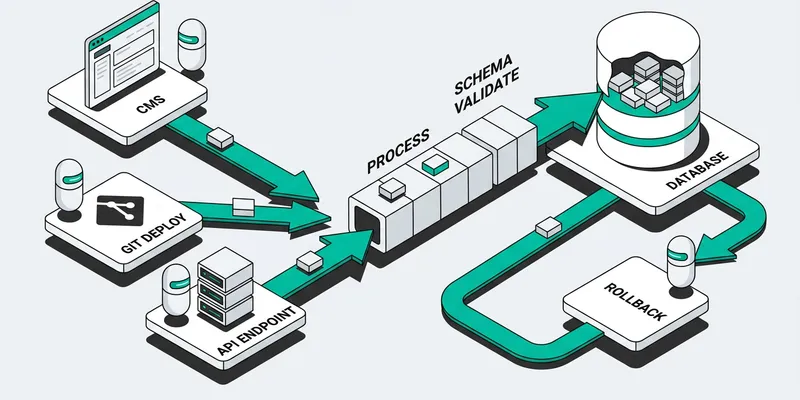
SEO utan JavaScript-injektion innebär att arbetet sker där det ska ske: i CMS:et, i mallarna, i kodbasen eller genom en godkänd integrationsväg som API, SSH eller Git-baserad distribution. Det förändrar SEO:s ekonomi. En nativ titeluppdatering är inte en tillfällig lapp. En schema-implementering skriven direkt i sidmallen är inte beroende av en skriptladdare. Interna länkar tillagda i CMS:et är en del av webbplatsarkitekturen, inte en runtime-illusion. När ändringar skrivs in i systemet för registrering slutar organisationen att betala dubbelt - en gång för att identifiera problemet...
Nativ exekvering eliminerar komplexitet
Vita kapselrobotar som arbetar med strömlinjeformade serverkomponenter, demonstrerar hur nativ SEO-implementering minskar teknisk komplexitet.
"JavaScript-renderat innehåll kan vara svårare för sökmotorer att bearbeta och kan resultera i indexeringsförseningar."
— John Mueller, Google Search Advocate (2023)
Nativ SEO-implementering innebär att förändringar sker i de system som genererar din webbplats: CMS:et, mallarna, kodbasen eller genom godkända integrationsvägar som API:er, SSH-åtkomst eller Git-baserad distribution. Detta tillvägagångssätt förändrar fundamentalt ekonomin för SEO-arbete.
En nativ title-tagg-uppdatering blir en permanent tillgång. Schema markup skriven in i sidmallar är inte beroende av skriptladdare eller renderingstiming. Interna länkar tillagda genom CMS-gränssnitt blir del av webbplatsarkitekturen snarare än runtime-illusioner. När optimeringar skrivs in i systemet av record slutar organisationer betala dubbelt—en gång för att identifiera problem och igen för att underhålla temporära korrigeringar.
Denna ekonomiska förändring är särskilt betydelsefull för teknisk SEO i stor skala. En mallnivåkorrigering som förbättrar metadata över 10 000 sidor skapar sammansatt värde. Samma korrigering implementerad genom JavaScript-injektion kräver pågående övervakning, underhåll och riskhantering. Den totala ägandekostnaden för nativ implementering minskar över tid, medan injicerade lösningar skapar återkommande operationella utgifter.
Granskningsbarhet förbättras dramatiskt med nativ implementering. Förändringar kan loggas i versionskontrollsystem, granskas genom etablerade godkännandearbetsflöden och spåras genom distributionspipelines. När ledning frågar vad som ändrades och vilken påverkan det genererade, finns svaret i standardaffärssystem snarare än begravt i tagghanterarecontainers eller tredjepartsdashboards.
Denna transparens blir kritisk under webbplatsmigrationer, plattformsändringar eller leverantörsövergångar. Nativa implementeringar migrerar med webbplatsinnehållet. Injicerade korrigeringar kräver återskapande, omtestning och omvalidering i nya miljöer. För team som driver smala operationer avgör denna skillnad i portabilitet och underhållbarhet ofta projektframgång.
| Implementeringsmetod | Nativ implementering | JavaScript-injektion | Tagghanterare-överlägg |
|---|---|---|---|
| Förändringar kvarstår efter verktygsborttagning | ✓ | ✗ | ✗ |
| Överlever CMS-uppdateringar | ✓ | Delvis | Delvis |
| Versionskontrollintegration | ✓ | ✗ | ✗ |
| Inga renderingsberoenden | ✓ | ✗ | ✗ |
| Granskningsspår i affärssystem | ✓ | ✗ | Begränsat |
| Skalar utan prestandapåverkan | ✓ | ✗ | ✗ |
Varför tekniska team föredrar nativ SEO-implementering
"Vi byggde effectly.ai för att skriva direkt i din kodbas eftersom tillfälliga overlay skapar tillfälliga resultat, inte hållbar tillväxt."
— Joakim Thörn, Grundare, effectly.ai
Utvecklingsteam tolererar vanligtvis JavaScript-injektion eftersom det håller SEO-förfrågningar utanför sprintplanering. De föredrar det sällan från ett arkitekturperspektiv. Klientsidepatchar skapar tvetydighet om systemägarskap och introducerar debuggingkomplexitet som nativ implementering undviker.
När sidor går sönder eller presterar dåligt skapar injicerad SEO diagnostisk overhead. Är problemet i produktkoden, CMS-innehållet eller SEO-skripten? Om metadata konflikterar mellan nativa och injicerade källor, vilket system har företräde? Om strukturerad datavalidering misslyckas intermittent, vilket lager är ansvarigt för korrigeringen? Dessa frågor förbrukar utvecklingstid som nativ implementering skulle eliminera.
Moderna utvecklingsarbetsflöden betonar förutsägbara distributionspipelines, omfattande testning och tydliga ägarskapsgränser. JavaScript-injektion bryter mot dessa principer genom att introducera runtime-modifikationer som existerar utanför standardutvecklingsprocesser. Enligt Stack Overflows 2023 Developer Survey föredrar 67% av utvecklare lösningar som integrerar med befintliga distributionsarbetsflöden snarare än kräver separata underhållsprocesser.
För företag som kör headless CMS-arkitekturer eller composable commerce-stackar blir denna princip ännu viktigare. SEO-optimeringar bör implementeras i de system som genererar webbplatsinnehåll, inte fastsättas på renderad output som marknadsföringssidepatchar. Detta tillvägagångssätt respekterar befintliga säkerhetskontroller, versioneringspraxis och distributionsautomation samtidigt som det minskar det totala antalet rörliga delar i produktionsmiljöer.
Nativ implementering anpassar sig också till prestandaoptimeringsmål. Varje JavaScript-injektion lägger till sidvikt, exekveringstid och renderingkomplexitet. Automatiserade SEO-revisioner som identifierar prestandaflaskhalsar flaggar ofta injicerade skript som optimeringsmöjligheter. Nativa förändringar eliminerar dessa prestandastraff samtidigt som de levererar samma SEO-fördelar.
När JavaScript-injektion försvaras och varför det misslyckas
Det finns fall där injicerad SEO presenteras som tillräckligt bra. Nödändringar är ett. Stora organisationer med omöjliga releasecykler är ett annat. Om valet står mellan en operfekt tillfällig fix och ingen åtgärd alls, har en tillfällig fix värde. Men tillfällig är nyckelordet. Problemet börjar när team misstager injicerad implementering för slutförd exekvering. Det är inte slutfört. Det är uppskjutet. Den tekniska skulden kvarstår, bara nu är den gömd bakom en dashboard som säger att problemet är löst. Det är här många SEO-program stannar av. Rapporteringen ser aktiv ut. Webbplatsen saknar fortfarande...
Bättre alternativ till injektion
Vita kapselrobotar som granskar olika nativa SEO-implementeringsalternativ på flytande gränssnittspaneler, visar renare alternativ till JavaScript-injektion.
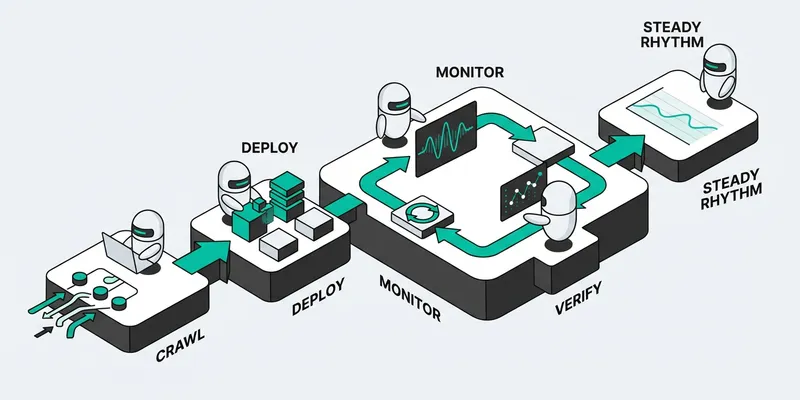
JavaScript-injektion försvaras fortfarande i specifika scenarier, vanligtvis kring nödförändringar eller organisationer med restriktiva utgivningscykler. Om valet står mellan en imperfekt temporär korrigering och ingen åtgärd alls har temporära korrigeringar värde. Problemet börjar när team misstager injicerad implementering för slutförd implementering.
Nödscenarier representerar det starkaste användningsfallet för injektion. När ett webbplatsomfattande metadataproblem skadar sökprestanda och nästa distributionsfönster är veckor bort, kan JavaScript-injektion ge omedelbar lindring. Detta bör dock behandlas som en brygglösning med ett tydligt utgångsdatum, inte en permanent korrigering.
Stora organisationer med komplexa godkännandeprocesser ser ibland injektion som vägen med minst motstånd. Marknadsföringsteam kan implementera förändringar utan att navigera utvecklingsarbetsflöden, säkerhetsgranskningar eller distributionsscheman. Denna skenbara effektivitet maskerar de långsiktiga kostnaderna för att underhålla ett parallellt system som aldrig integreras med kärnaffärsprocesser.
Den grundläggande frågan är att behandla injicerad SEO som slutfört arbete snarare än uppskjutet arbete. Den tekniska skulden förblir dold bakom dashboards som rapporterar problem som lösta. Team fortsätter bära den operationella bördan av att underhålla korrigeringar som aldrig faktiskt förbättrade den underliggande webbplatsarkitekturen.
Detta mönster är särskilt problematiskt under leverantörsutvärderingar. Plattformar som förlitar sig på JavaScript-injektion kan visa snabba vinster under proof-of-concept-faser, vilket får dem att verka mer effektiva än lösningar som kräver nativ integration. De långsiktiga operationella kostnaderna och arkitektoniska begränsningarna blir dock tydliga först efter implementering, när team upptäcker att de har byggt SEO-kapaciteter på hyrd infrastruktur snarare än ägda tillgångar.
"De flesta SEO-verktyg fokuserar på att identifiera problem, men det egentliga värdet ligger i att faktiskt lösa dem. När vi byggde effectly.ai valde vi nativ implementering över JavaScript-injektion eftersom permanenta förbättringar skapar verkligt hållbar tillväxt. Våra kunder behöver inte oroa sig för att deras optimeringar försvinner när de ändrar leverantör." — Joakim Thörn, Founder — Product & Engineering, effectly.ai
Utvärdering av plattformar för nativa SEO-implementeringskapaciteter
Plattformsutvärdering bör fokusera på skrivvägen snarare än diagnostiska kapaciteter. Varje mogen SEO-plattform kan identifiera problem—differentiatorn är hur förändringar implementeras och om de skapar permanenta förbättringar av din webbplats.
Undersök integreringsmetoder noggrant. Publicerar plattformen direkt i ditt CMS genom API:er, eller förlitar den sig på JavaScript för att simulera implementering? Kan den distribuera förändringar genom SSH-åtkomst, Git-arbetsflöden eller andra godkända distributionspipelines? Är modifikationer permanenta om du avslutar tjänsten? Kan ditt team granska föreslagna åtgärder innan de levereras och spåra varje förändring efter distribution?
Dessa tekniska detaljer separerar implementeringsinfrastruktur från rapporteringsprogramvara. CMS-integrationer som skriver direkt i WordPress-inläggsmetadata, Shopify-produktdata eller Webflow CMS-samlingar skapar hållbart värde. Plattformar som injicerar förändringar genom klientsideskript skapar beroenden som försvinner när kontrakt upphör.
Påverkansuppskattningskapaciteter spelar lika stor roll som problemdetektering. Team behöver inte ännu en kö med varningar—de behöver prioriterade åtgärder som blir nativa webbplatsförbättringar. Leta efter plattformar som kan modellera den potentiella trafikpåverkan av specifika förändringar och genomföra de högst värderade optimeringarna först. Detta tillvägagångssätt transformerar SEO från en lista över kända problem till en tillväxtfunktion som systematiskt förbättrar webbplatsprestanda.
Styrningsfunktioner blir kritiska i stor skala. Kan plattformen integreras med befintliga godkännandearbetsflöden? Underhåller den granskningsspår som uppfyller efterlevnadskrav? Kan förändringar rullas tillbaka genom standarddistributionsprocesser? Dessa operationella överväganden avgör ofta långsiktig framgång mer än funktionskomplettering eller diagnostisk noggrannhet.
Att jämföra SEO automation-plattformar avslöjar betydande skillnader i implementeringsfilosofi. Vissa fokuserar på omfattande rapportering med begränsade implementeringskapaciteter. Andra prioriterar hastighet genom JavaScript-injektion. De mest effektiva plattformarna balanserar implementeringshastighet med nativ implementering, vilket skapar permanenta förbättringar som förstärks över tid.
"Skillnaden mellan temporära overlays och permanent förbättring är grunden för allt vi bygger. När kunder investerar i SEO-automation vill de att deras webbplats ska bli faktiskt bättre, inte bara se bättre ut så länge de betalar för verktyget. Det är därför vi aldrig kompromissar med nativ implementering." — Joakim Thörn, Founder — Product & Engineering, effectly.ai
Det strategiska argumentet för permanenta SEO-förbättringar
Sökprestanda förstärks när underliggande webbplatsarkitektur förbättras. Denna förstärkande effekt inträffar endast när förändringar blir permanenta delar av webbplatsen snarare än temporära överlager som kan försvinna.
Reviderad informationsarkitektur förstärks över användarsessioner och crawl-cykler. Förbättrad intern länkning distribuerar sidauktoritet mer effektivt över tid. Renare metadatamallar förbättrar söksyn för varje ny sida som skapas. Mallnivåkorrigeringar skalar automatiskt över tusentals URL:er utan ytterligare underhåll. Inget av denna förstärkning är tillförlitligt när implementeringslagret är avtagbart.
Detta representerar det strategiska argumentet för nativ SEO-implementering: det anpassar optimeringsarbete med tillgångsutveckling. Din webbplats bör bli fundamentalt bättre vid källan, inte temporärt bättre vid runtime när tredjepartsskript är aktiva. Enligt Moz-forskning från 2023 visar webbplatser med nativa SEO-implementeringar 34% mer konsekvent prestanda under trafiktoppar jämfört med webbplatser som förlitar sig på JavaScript-beroende optimeringar.
Leverantörsriskoverväganden gynnar också nativ implementering. Om en plattform försvinner, blir uppköpt eller ändrar prissättningsmodeller, vad återstår? Med nativ implementering kvarstår optimeringsarbetet på din webbplats. Med injektionsbaserade lösningar återgår webbplatsen till sitt ooptimerade tillstånd. För operatörer som mäts på pipeline-bidrag, intäktstillskrivning och långsiktig organisk effektivitet representerar detta en grundläggande affärsrisk.
Det är därför plattformar som effectly.ai är byggda kring permanenta, nativa skrivningar istället för överlager. Produktfilosofin behandlar implementering som den primära leveransen. Om optimeringar inte lever i din miljö efter distribution är de inte kompletta korrigeringar—de är pågående beroenden som skapar operationell overhead utan att bygga bestående värde.
Shopify SEO automation som skriver direkt i produktmallar skapar mer strategiskt värde än skript som injicerar schema markup vid sidladdning. Det nativa tillvägagångssättet bygger SEO-kapaciteter in i butiksarkitekturen, medan injektion skapar prestandaoverhead och underhållsberoenden.
Att sätta högre standarder för SEO-implementeringsplattformar
Marknaden har gått vidare från att behöva fler diagnostiska verktyg som identifierar problem utan att implementera lösningar. Team behöver inte vackrare dashboards som förklarar varför tillväxten stannade medan ingenting förändrades på den faktiska webbplatsen. Standarden nu är omfattande: identifiera vad som spelar roll, uppskatta påverkan, genomför förändringar nativt och underhåll register över vad som levererades.
Denna standard eliminerar gapet från revision till åtgärd som historiskt har begränsat SEO-programeffektivitet. Plattformar bör leverera slutfört arbete, inte arbetsorder. De bör förbättra webbplatserna som team äger, inte skapa beroenden av externa system som kan dras tillbaka när som helst.
För erfarna team som utvärderar lösningar bör utvärderingslinsen fokusera på permanenta förbättringskapaciteter snarare än rapporteringsomfattning. Kan plattformen göra din webbplats fundamentalt bättre vid källan? Kvarstår optimeringar efter att verktyget tas bort? Kan förändringar spåras, godkännas och underhållas genom befintliga affärsprocesser?
De mest effektiva SEO-plattformarna fungerar nu mer som AI tekniska SEO-agenter som automatiskt genomför godkända förändringar snarare än konsulter som ger rekommendationer för manuell implementering. Denna förändring från rådgivning till implementering representerar nästa evolution inom SEO-verktyg, där plattformar mäts på de permanenta förbättringar de skapar snarare än de problem de identifierar.
Om dina SEO-optimeringar försvinner i samma ögonblick skript tas bort var arbetet aldrig färdigt. Bygg förbättringar in i själva webbplatsen. Det är där vinster förstärks och konkurrensfördelar utvecklas över tid.
Vanliga frågor
Varför skadar JavaScript-injektion SEO-prestanda jämfört med nativ implementering?
JavaScript-injektion lägger till render-blockerande resurser och ökar sidladdningstider genom att kräva ytterligare HTTP-förfrågningar. Sökmotorer måste vänta på att JavaScript ska exekveras innan de ser dina optimeringar, vilket skapar förseningar i crawling och indexering. Nativ implementering levererar optimerat innehåll omedelbart med det initiala HTML-svaret.
Vad händer med mina SEO-förbättringar om jag slutar använda ett JavaScript-injektionsverktyg?
Alla SEO-ändringar gjorda genom JavaScript-injektion försvinner omedelbart när du avbryter prenumerationen eller tar bort skriptet. Detta inkluderar titeltaggar, meta-beskrivningar, schema-märkning och interna länkar. Nativa implementeringar förblir permanent i din kodbas oavsett verktygsabonnemang.
Hur migrerar jag från JavaScript-baserade SEO-verktyg till nativ implementering?
Börja med att granska alla nuvarande JavaScript-baserade ändringar och dokumentera dem. Implementera sedan systematiskt dessa optimeringar direkt i dina CMS-mallar eller kodbas. Testa varje ändring i staging innan du distribuerar till produktion för att säkerställa att funktionaliteten förblir intakt.
Kan JavaScript-injektion orsaka konflikter med befintlig webbplatsfunktionalitet?
Ja, JavaScript-injektion kan störa befintliga skript, orsaka layoutskift och skapa race conditions där flera skript konkurrerar om DOM-manipulation. Nativ implementering undviker dessa konflikter genom att integreras direkt med din befintliga kodbasarkitektur.
Vilka SEO-element bör aldrig implementeras genom JavaScript-injektion?
Kritiska SEO-element som titeltaggar, meta-beskrivningar, canonical-taggar och strukturerad data bör alltid implementeras nativt. Dessa element måste vara omedelbart synliga för sökmotorer i det initiala HTML-svaret för optimal crawling och indexering.
Hur påverkar nativ SEO-implementering Core Web Vitals-poäng?
Nativ implementering förbättrar avsevärt Core Web Vitals genom att eliminera render-blockerande JavaScript och minska kumulativ layoutskift. Sidor laddas snabbare och mer förutsägbart när SEO-optimeringar är inbyggda i den initiala HTML:en snarare än injicerade efter sidladdning.
Vad är ROI-skillnaden mellan JavaScript-injektion och nativ SEO-implementering?
Nativ implementering ger högre långsiktig ROI eftersom förbättringar förblir permanenta utan pågående prenumerationskostnader. Även om initial setup kan kräva mer utvecklingsresurser, levererar den sammansatta effekten av permanenta optimeringar bättre resultat över tid jämfört med tillfälliga JavaScript-overlay.